In the rapidly evolving landscape of psychiatric education, the convergence of neuroscience and artificial intelligence is opening new frontiers for learning and professional development.
At the heart of this revolution lies the fascinating interplay between mirror neurons and AI-driven educational technologies, promising to transform how future psychiatrists and mental health professionals acquire and refine their skills.
4. Developing AI-assisted Reflection Tools:
By harnessing the synergy between neural mirroring and AI in psychiatric education, we have the potential to cultivate a new generation of highly skilled, deeply empathetic mental health professionals. This approach not only enhances the learning experience but also promises to elevate the quality of patient care. As we stand at the forefront of this exciting educational revolution, let's embrace the transformative potential of neuroscience-informed, AI-enhanced psychiatric training.
At the heart of this revolution lies the fascinating interplay between mirror neurons and AI-driven educational technologies, promising to transform how future psychiatrists and mental health professionals acquire and refine their skills.
Understanding Neural Mirroring in Learning
Mirror neurons, first discovered in the 1990s, activate both when an individual performs an action and when they observe someone else performing the same action. In the context of psychiatric education, these neurons play a crucial role in observational learning, empathy development, and the acquisition of complex interpersonal skills essential for effective therapy.
Recent research suggests that the mirror neuron system is highly plastic and can be enhanced through targeted training. This plasticity opens up exciting possibilities for developing more effective, neuroscience-informed educational strategies in psychiatry.
AI-Enhanced Learning: Amplifying Neural Mirroring
Artificial Intelligence is revolutionizing education across disciplines, and psychiatric training is no exception. By leveraging AI, we can create learning experiences that more effectively engage and enhance the mirror neuron system:
1. Virtual Reality (VR) Simulations:
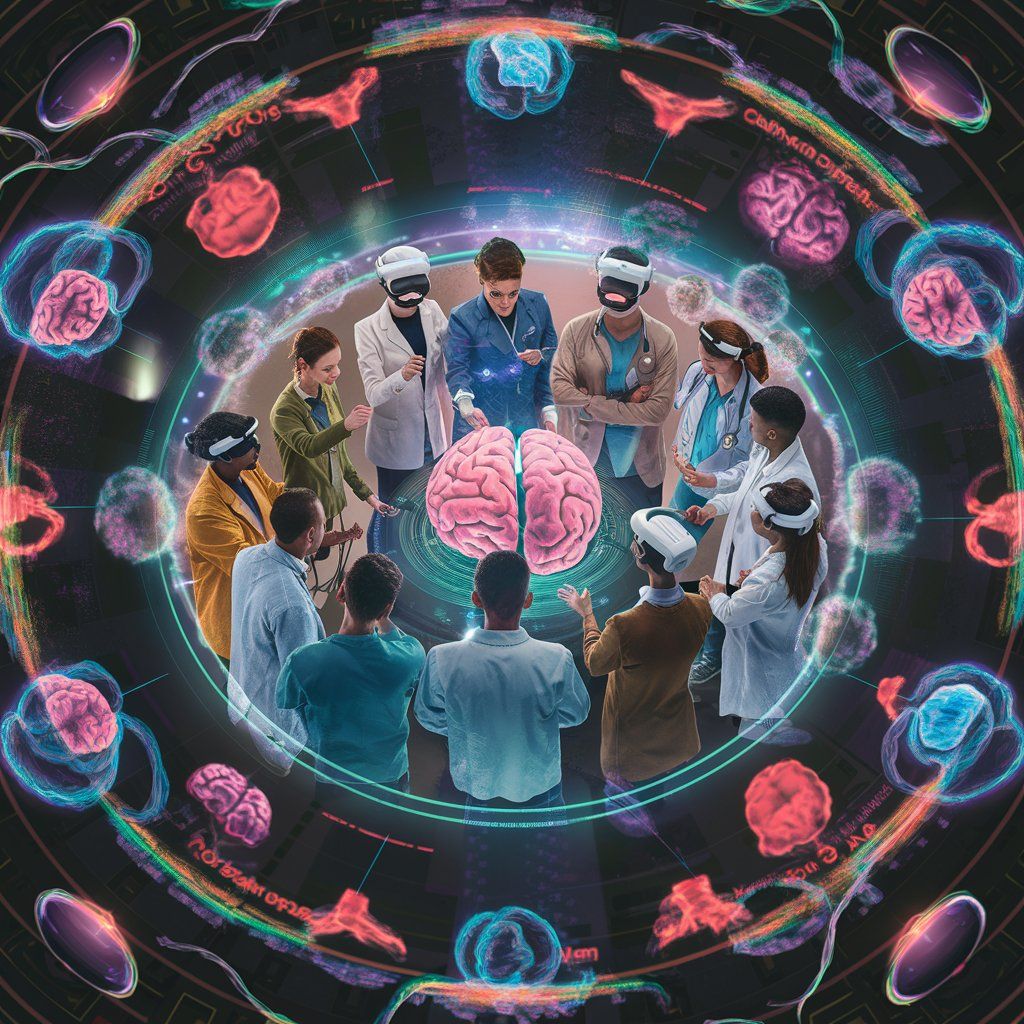
- Application: AI-driven VR simulations can provide realistic patient interactions, allowing trainees to practice empathy and therapeutic techniques in a safe, controlled environment.
- Benefit: This approach may enhance mirror neuron activation, leading to more robust skill acquisition and transfer to real-world settings.
2. Adaptive Learning Systems:
- Application: AI algorithms can analyze a learner's performance and tailor educational content to optimize engagement of the mirror neuron system.
- Benefit: This personalized approach can accelerate the development of empathy and clinical skills.
3. Emotion Recognition Training:
- Application: AI-powered tools can help trainees refine their ability to recognize and respond to subtle emotional cues.
- Benefit: This can enhance the mirror neuron system's capacity for emotional attunement, a crucial skill in psychiatric practice.
4. Real-time Feedback Systems:
- Application: AI can provide immediate, nuanced feedback on a trainee's interactions in simulated or real clinical scenarios.
- Benefit: This rapid feedback loop can accelerate the refinement of interpersonal skills and enhance neural mirroring capabilities.
Strategies for Implementing Neural Mirroring and AI in Psychiatric Education
1. Integrating VR-based Empathy Training:
1. Integrating VR-based Empathy Training:
- Practice: Incorporate regular VR sessions that simulate diverse patient encounters.
- Application: This can enhance trainees' mirror neuron activation and empathy skills in a controlled, measurable environment.
2. Implementing AI-driven Personalized Learning Paths:
- Practice: Utilize adaptive learning systems that tailor content based on individual learning patterns and needs.
- Application: This approach can optimize engagement of the mirror neuron system, leading to more efficient and effective skill acquisition.
3. Enhancing Observational Learning with AI:
- Practice: Use AI to identify and highlight key moments in recorded therapy sessions for targeted study.
- Application: This can help trainees focus on critical interpersonal dynamics, enhancing their mirror neuron-driven observational learning.
4. Developing AI-assisted Reflection Tools:
- Practice: Implement AI systems that guide trainees through structured reflection on their clinical experiences.
- Application: This can deepen understanding and integration of experiences, potentially enhancing neural plasticity and mirror neuron function.
Shaping the Future of Psychiatric Education
The integration of neural mirroring concepts with AI-driven educational technologies represents a powerful frontier in psychiatric training. By leveraging these tools, we can create more effective, engaging, and personalized learning experiences that enhance empathy, clinical skills, and overall therapeutic effectiveness. Here's how to take action:
❒ Embrace Innovation: Stay open to incorporating cutting-edge AI and VR technologies in your educational programs.
❒ Prioritize Neuroscience-Informed Approaches: Design curricula that explicitly target and enhance mirror neuron function.
❒ Foster a Culture of Continuous Learning: Encourage ongoing engagement with AI-enhanced learning tools throughout a psychiatrist's career.
❒ Collaborate Across Disciplines: Partner with AI experts, neuroscientists, and education specialists to develop more effective training programs.
❒ Evaluate and Iterate: Continuously assess the impact of these new approaches and refine them based on outcomes and emerging research.
By harnessing the synergy between neural mirroring and AI in psychiatric education, we have the potential to cultivate a new generation of highly skilled, deeply empathetic mental health professionals. This approach not only enhances the learning experience but also promises to elevate the quality of patient care. As we stand at the forefront of this exciting educational revolution, let's embrace the transformative potential of neuroscience-informed, AI-enhanced psychiatric training.
References
Catmur, C., Walsh, V., & Heyes, C. (2007). Sensorimotor learning configures the human mirror system. Current Biology, 17(17), 1527-1531.
Rizzolatti, G., & Craighero, L. (2004). The mirror-neuron system. Annual Review of Neuroscience, 27, 169-192.